

Part 5: Trust But Verify - How a Damages Expert Evaluates Financial Records
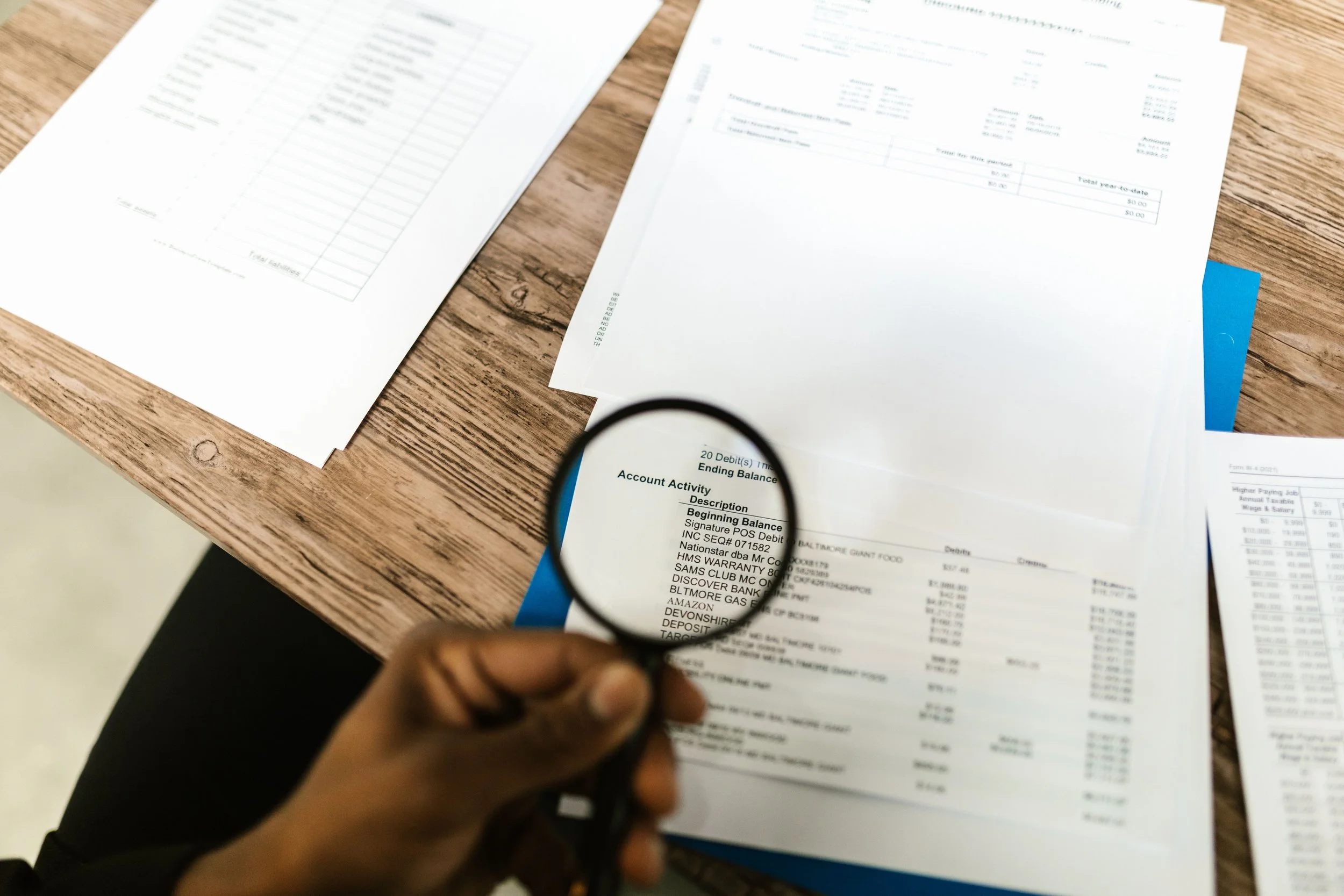
By the time the documents have been produced and the depositions are done, there is often a sense that the hard part is over. The records are in hand. Now the expert just runs the numbers.
Not quite.
Before any of that information is incorporated into a damages analysis, we have to “test” it. However, not in an auditing or verifying sense. Financial records produced in litigation are not always complete, accurate, or presented in a way that reflects the true financial picture of a business. A damages expert who simply accepts what they are given at face value is not doing their job. The key starting point is: Receive the records produced, but don’t blindly accept them.
Why Financial Records Require Scrutiny
There are several reasons why financial records in a litigation context deserve a skeptical eye.
At times, the records are genuinely incomplete. Documents were not maintained, systems of record were changed, or data for certain periods are simply missing from production. Other times, the records are inconsistent, where numbers that should reconcile to each other do not, or where figures in the tax returns do not match the internal financials. And sometimes the records have been prepared or presented in a way that tells a particular story, one that may not hold up when tested against other available information.
None of this is necessarily intentional. Businesses are messy, accounting is imperfect, and small companies in particular often do not maintain their books with litigation in mind. But as damages experts, it is our job to understand what we are working with before we decide to rely on it.
Getting Into the Books
One of the most valuable things a damages expert can do when financial records arrive is get into the underlying accounting software rather than relying solely on printed reports or exported summaries. When we have access to a company's QuickBooks file, for example, we can see not just what the financial statements say but how those numbers were constructed. That means reviewing individual journal entries, looking for unusual reclassifications, identifying patterns made close to the litigation period, and assessing whether the books were maintained consistently over time.
A printed profit and loss statement tells you what someone decided was important to show in the summarized information. The underlying accounting records tells you how the company arrived at those numbers, giving the expert the foundation needed to identify potential areas for further investigation.
Valid8 and the Challenge of Large Datasets
In cases involving large volumes of financial data, such as bank statements, credit card records, or transaction logs, manual review alone is not always practical or efficient. At Cogence Group we use Valid8, a SOC2-certified financial verification software, to extract, reconcile, and analyze large financial datasets. Valid8 allows us to follow the flow of money across accounts, identify missing or incomplete data, and flag transactions that warrant a closer look, all at a scale that would be enormously time-consuming to replicate manually. For a deeper look at how we use Valid8 in our forensic accounting work, check out our earlier post here.
In cases involving a large number of transactions, we also use population sampling techniques to test the accuracy and completeness of a dataset without reviewing every line item. We have written about that process in more detail here.
Benchmarking Against Industry and History
Testing accounting results is not just an internal exercise. Once we understand what the records show, we can often test those results against external benchmarks. How does this company's financial performance compare to others in the same industry? Are their margins consistent with what we would expect given the nature of the business? Are there periods where the numbers diverge from historical trends in ways that need to be explained?
This is also where industry experts can play a role. At Cogence Group, our expertise as CPAs and former big-firm auditors is in financial and accounting analysis. But some cases involve industries where validating certain assumptions requires a level of specialized operational or technical knowledge that goes beyond the numbers.
In an engagement involving a developing winery, for example, we brought in a viticulture and winery operations expert to help us evaluate whether the company's projected yield timelines, grape-sourcing costs, and production ramp-up assumptions were realistic given the vines' age and the regional growing conditions.
Those are not questions a financial analyst can answer, and certainly not from a spreadsheet alone. In those situations, we are not hesitant to suggest bringing in a credible industry expert to fill that gap. A well-supported analysis that draws on the right expertise across disciplines is ultimately a stronger one, and we would rather get it right than go it alone.
What Happens When the Data Has Problems
Data issues do not necessarily mean the analysis cannot be completed, but they do affect how it gets built and how it gets presented. When records are incomplete, we may need to reconstruct certain figures using alternative sources or clearly documented assumptions. When records are inconsistent, we need to resolve the inconsistency or explain why one source was relied on over another.
At Cogence Group, we believe an analysis that is transparent about its data limitations is far more defensible than one that pretends the data is cleaner than it is. We expect opposing counsel to find the shortcomings, so we do not want to ignore them. It is better to address them directly.
Up next: Once the financial records have been validated, the next challenge is one of the most contested areas in any damages case: projections. In Part 6, we will cover how a damages expert evaluates whether a forecast is grounded in reality or built simply for litigation.